Wondering what is a crypto token and how it differs from a coin? You’re in good company. A token is a digital asset issued on someone else’s blockchain through a smart contract, while a coin has its own.
If the basics are new to you, start with our guide on what is cryptocurrency and then come back for the coin and token split.
| Item | Key fact |
|---|---|
| Coin | Has its own blockchain |
| Token | Built on an existing blockchain using smart contracts |
| Network fees | Paid in the native coin, not in tokens |
| Common Ethereum token standards | ERC-20 (fungible tokens) and ERC-721 (NFTs) |
| Common token categories | Utility, security and governance |
| Security tokens | Subject to regulation (as of the December 2023 source) |
The table draws on 1inch’s December 2023 explainer and KoinX’s guide, last updated in February 2026. Definitions, standards and rules can change, so check the sources before you rely on these figures.
Coins and tokens: the core difference
A coin is the native asset of its own blockchain. According to 1inch’s December 2023 post, Bitcoin operates only on the Bitcoin network, and launching a new coin would require building a new blockchain first.
A token skips that step. KoinX, in a guide last updated in February 2026, describes tokens as digital assets built on top of existing blockchains using smart contracts.
The practical contrasts are easy to remember:
- Blockchain: a coin has its own chain, while a token borrows one.
- Creation: coins come from the rules of their network, while tokens are minted by smart contracts. Crypto APIs, in an October 2023 post, puts it simply: tokens are not mined.
- Fees: network fees are paid in the native coin, and the same October 2023 post says tokens cannot be used for paying transaction fees.
People often use the two words as if they meant the same thing. They do overlap, since both are units of cryptocurrency, but the technical foundation is different.
How are tokens created, and which rules do they follow?
Tokens are created by minting, not by validating blocks. In its December 2023 post, 1inch says you just need to implement a smart contract using existing templates and deploy it on a blockchain, and that Ethereum was the first blockchain platform to introduce smart contracts and opportunities to create tokens (1inch).
That low barrier is useful for developers. It also means that the mere existence of a token says very little about the quality of the project behind it.
Each blockchain publishes a token standard, a set of rules that tokens must follow to work on that network. KoinX names ERC-20 for fungible tokens and ERC-721 for non-fungible tokens (NFTs) as the most common standards on Ethereum, while 1inch lists BEP-20 for BNB and TRC-20 for Tron.
Because the same token can follow several standards, 1inch notes it can be issued on multiple blockchains. Wallets and apps rely on these shared rules to recognise a token.
What a native coin does for its network
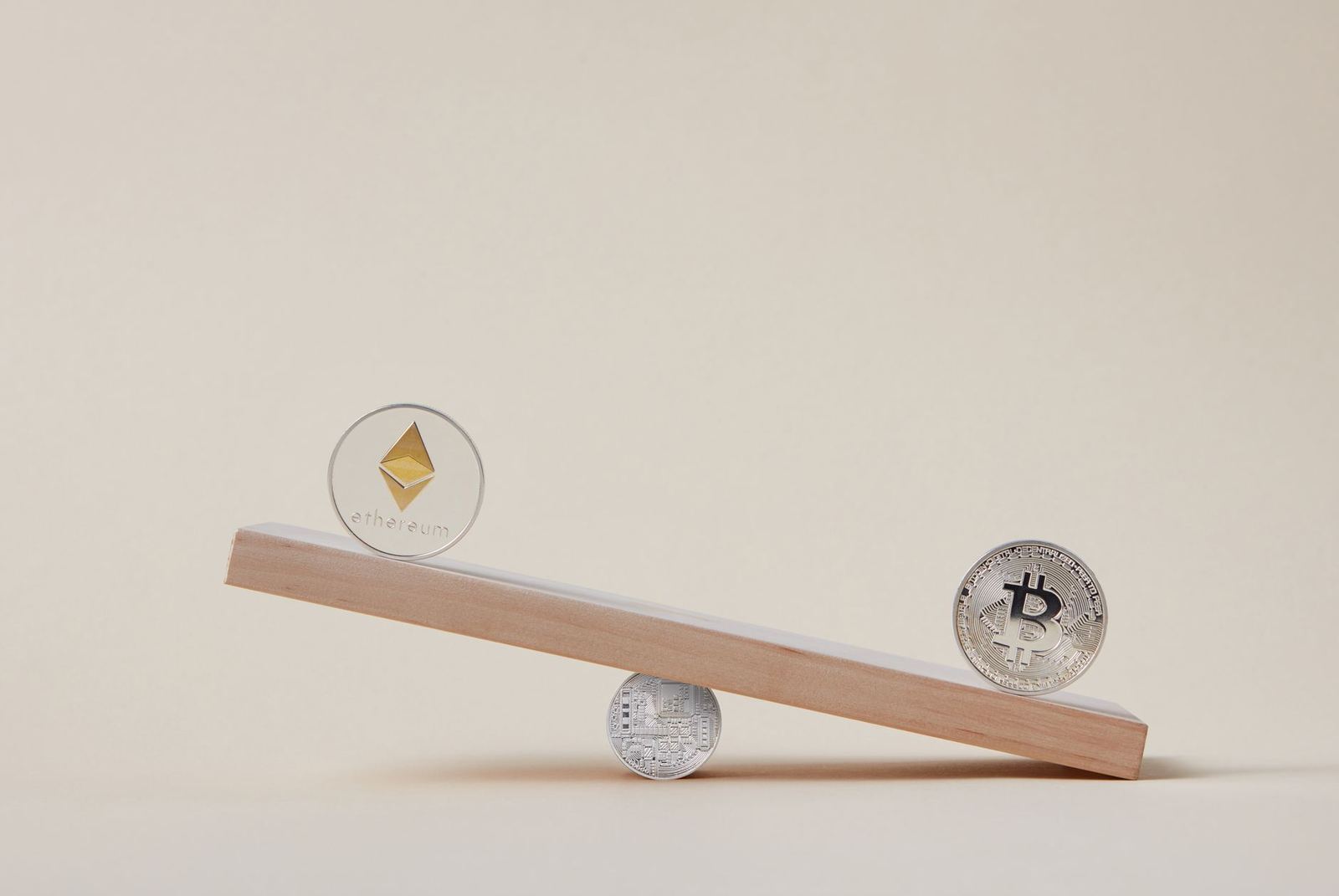
A coin is more than a unit of value. It is part of how the network runs, and 1inch’s December 2023 post gives two examples: miners validating transactions on the Bitcoin network are rewarded in BTC, and Ethereum’s gas fees are paid in ETH.
This is why tokens depend on coins. KoinX’s guide points out that ETH is required to deploy smart contracts and execute token transactions on Ethereum, so the token ecosystem cannot function without the native coin.
If you are curious where the first coin came from, the story of who created bitcoin is a good next read.
Common types of tokens
Tokens can do many jobs because each one is tied to a project rather than to a whole network. Crypto APIs’ October 2023 post groups them broadly into utility, security and governance tokens, and other sources add a few more forms.
- Utility tokens act as a key to services provided by the issuing platform. KoinX names Chainlink (LINK) for oracle services and Uniswap (UNI) for decentralized exchange features as examples.
- Governance tokens represent voting rights, so holders can have a say in a project’s decisions, according to 1inch’s December 2023 post.
- Security tokens act as a digital form of traditional finance securities. As of 1inch’s December 2023 post, they are subject to regulation, unlike other tokens.
- NFTs are unique and not interchangeable, so each one differs from the others, as 1inch explains.
- Stablecoins are tokens whose price is tied to traditional assets such as the U.S. dollar or Euro, according to 1inch’s December 2023 post.
- Wrapped tokens let a coin work on another chain. 1inch gives the example that after wrapping, BTC becomes WBTC, which can be transferred and stored on other chains.
Note the naming quirk: a stablecoin is called a “coin” but is a token by this definition. The labels are not always tidy, and the same project can be described differently by different publishers, so it helps to ask what a token actually does on its network.
For a wider map of the field, see our overview of types of cryptocurrency, which places coins and tokens among the other categories.
Risks of tokens, explained plainly
Tokens come with the same general risks as other crypto assets, plus a few of their own. KoinX lists these challenges in its guide, last updated in February 2026:
- Tokens are dependent on the host blockchain’s security and performance.
- Smart contract vulnerabilities can lead to exploits, which can mean lost funds.
- There is regulatory uncertainty, especially for security tokens.
- Control can become centralized if token distribution is concentrated.
Value is another factor. As 1inch’s December 2023 post puts it, a token’s price is influenced, among other factors, by the value of its issuing project, so a token can fall if its project struggles.
Rules differ by country and change over time. Treat any description of regulation as a snapshot from the date of its source, and not as legal guidance.
Frequently asked questions
Is a crypto token the same as a coin?
Show answer
No. A coin has its own blockchain, while a token does not and runs on another network, according to 1inch’s December 2023 post. Both are units of cryptocurrency.
Can one token exist on several blockchains?
Show answer
Yes. 1inch says a token can be issued on multiple blockchains, because its issuance and transfers rely on smart contracts and the standard of each chain.
Is a stablecoin a coin or a token?
Show answer
By the definition used by 1inch in December 2023, stablecoins are a type of token whose price is tied to traditional assets such as the U.S. dollar or the euro.
Are all tokens regulated?
Show answer
Not in the same way. As of 1inch’s December 2023 post, security tokens are subject to regulation, unlike other tokens, while KoinX’s February 2026 update still describes regulatory uncertainty. Check the rules where you live with a qualified professional.
This page is for general information and education only and is not financial, investment, tax or legal advice.