
You may be asking what is bitcoin without wanting jargon. It is a digital currency that runs on a peer-to-peer network, so people can send payments directly without a bank in the middle. Here are its origins and its limits.
If the basics are new to you, it helps to read our guide to what is cryptocurrency first.
| Item | Value |
|---|---|
| Whitepaper announced | October 31, 2008 |
| Whitepaper length | 9 pages |
| Whitepaper sections | 12 |
| Genesis block mined | January 3, 2009 |
| Time to read the whitepaper | about 20 minutes |
These figures come from Bitcoin Magazine’s glossary entry and LearnBitcoin’s glossary entry. Figures can change or be corrected, so check the sources before you rely on them.
Bitcoin in plain terms
Bitcoin is money that exists only as data, with its rules enforced by a network of computers instead of one company. The original proposal described a purely peer-to-peer version of electronic cash that would let online payments go directly from one party to another without going through a financial institution, as quoted by Bitcoin Magazine.
The problem it tackles is called double-spending. A digital file can be copied, so any payment system needs a way to stop the same coin being spent twice. The traditional fix is a central authority, or mint, that checks every transaction, but the whitepaper argues that the fate of the entire money system then depends on the company running the mint, as Bitcoin Magazine’s reproduction of the text shows.
Bitcoin’s answer is a shared, public record that no single party controls. LearnBitcoin’s summary lists the main building blocks of that design:
- Transactions as chained signatures, the mechanism by which coin ownership is transferred.
- Timestamping transactions into a publicly verified chain using proof-of-work.
- Nodes that broadcast, validate and converge on the longest chain.
- Incentives, meaning the block subsidy plus transaction fees.
The 2008 whitepaper that started it
On October 31, 2008, a person or group using the pseudonym Satoshi Nakamoto sent a paper titled “Bitcoin: A Peer-to-Peer Electronic Cash System” to a cypherpunk mailing list, according to Bitcoin Magazine. The paper is 9 pages long and has 12 sections, so it is short enough to read in a single sitting.
The network itself came a little later. LearnBitcoin says the network launched in January 2009 and lists the genesis block, block 0, as mined on January 3, 2009. It also estimates you can read the whitepaper in about 20 minutes.
The author’s identity has never been settled. A Cointelegraph feature published October 31, 2018 describes Satoshi Nakamoto as an anonymous creator who could be one person or a group of people. We cover that question separately in our explainer on who created bitcoin.
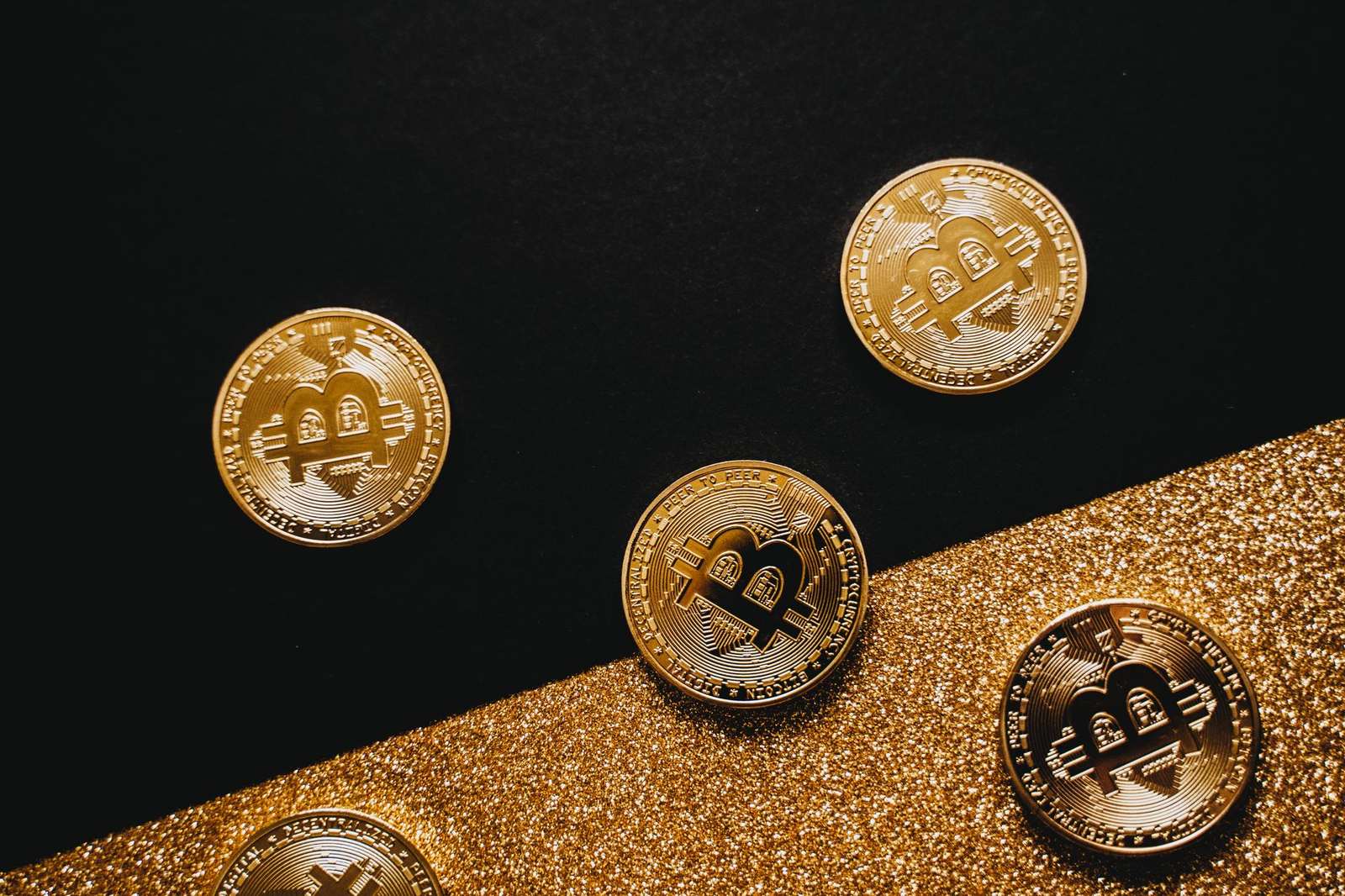
The ideas Bitcoin built on
Bitcoin did not appear from nothing. Bitcoin Magazine says the whitepaper drew on decades of research and the work of individuals such as Wei Dai, Nick Szabo and Hal Finney, as described on its glossary page.
A Cointelegraph feature points to three earlier threads that the whitepaper references or echoes:
- Digital timestamps: Haber and Stornetta’s timestamping work, published in 1991, is directly referenced in the whitepaper (Cointelegraph).
- b-money: Wei Dai’s proposal described a protocol for transacting and enforcing contracts in an electronic system in an untraceable way (Cointelegraph).
- Hashcash: Adam Back invented it in 1997, and it is primarily used to prevent email spam and denial-of-service attacks (Cointelegraph).
The same feature says Hashcash formed the basis for Bitcoin’s proof-of-work algorithm. That idea matters more than any other for how the network keeps its record honest, so the next section looks at it.
How proof-of-work protects the record
Proof-of-work means that adding a block to the chain takes real computing effort. Once that effort is spent, the whitepaper says the block cannot be changed without redoing the work, and later blocks chained after it mean an attacker would have to redo all of those too, according to Bitcoin Magazine.
It also settles who gets a say. The whitepaper calls proof-of-work essentially “one-CPU-one-vote”, and it treats the longest chain as the majority decision because that chain has the most work invested in it (Bitcoin Magazine). If honest nodes control most of the computing power, the honest chain outpaces any competing chain.
Participants are paid for doing this work. Cointelegraph describes the reward for unlocking a new block as a certain amount of newly minted BTC, while LearnBitcoin frames the block subsidy plus transaction fees as the economic engine that secures the network.
What is Bitcoin for, and where does it fall short?
The whitepaper’s stated purpose is an electronic payment system based on cryptographic proof instead of trust, letting two willing parties transact directly without a trusted third party. It adds that transactions which are computationally impractical to reverse would protect sellers from fraud (Bitcoin Magazine).
That design has trade-offs, and the original paper is only the base layer. LearnBitcoin notes that Lightning, SegWit, Taproot, multisig setups and HD wallets are not in the whitepaper because they did not exist yet. Later tools were built on top of the original design.
Some limits are worth knowing before you go any further:
- Volatility: Bitcoin’s market price can move sharply, and nothing in a general explainer can predict it.
- Hard-to-reverse payments: the same property that protects sellers means a payment sent to the wrong address, or a lost key, can mean lost funds.
- Scams: fake giveaways, impersonators and fraudulent platforms use the Bitcoin name. Treat any unsolicited offer with suspicion.
- Privacy: the whitepaper itself anticipated the address-reuse issue and addressed privacy through address rotation, per LearnBitcoin.
- Regulation: rules on holding and using Bitcoin differ by country and can change, so check with your local authority.
If you want to compare Bitcoin with another major network, our explainer on what is ethereum is a natural next read.
Frequently asked questions
Who invented Bitcoin?
Show answer
The whitepaper was published under the pseudonym Satoshi Nakamoto. Cointelegraph says that identity could be a single person or a group of people.
When did Bitcoin start?
Show answer
The whitepaper was announced on October 31, 2008, according to Bitcoin Magazine. LearnBitcoin lists the genesis block as mined on January 3, 2009.
Is the whitepaper hard to read?
Show answer
It is short, at 9 pages and 12 sections per Bitcoin Magazine. LearnBitcoin says you can read it in about 20 minutes.
Can a Bitcoin payment be reversed?
Show answer
The whitepaper aims for transactions that are computationally impractical to reverse, as quoted by Bitcoin Magazine. In practice, treat a payment as final and double-check every address before you send.
Does this site tell me whether to buy bitcoin?
Show answer
No. This site explains how things work and gives no buy, sell or hold calls, price predictions or return promises.
This article is for general information and education only and is not financial, investment, tax or legal advice.