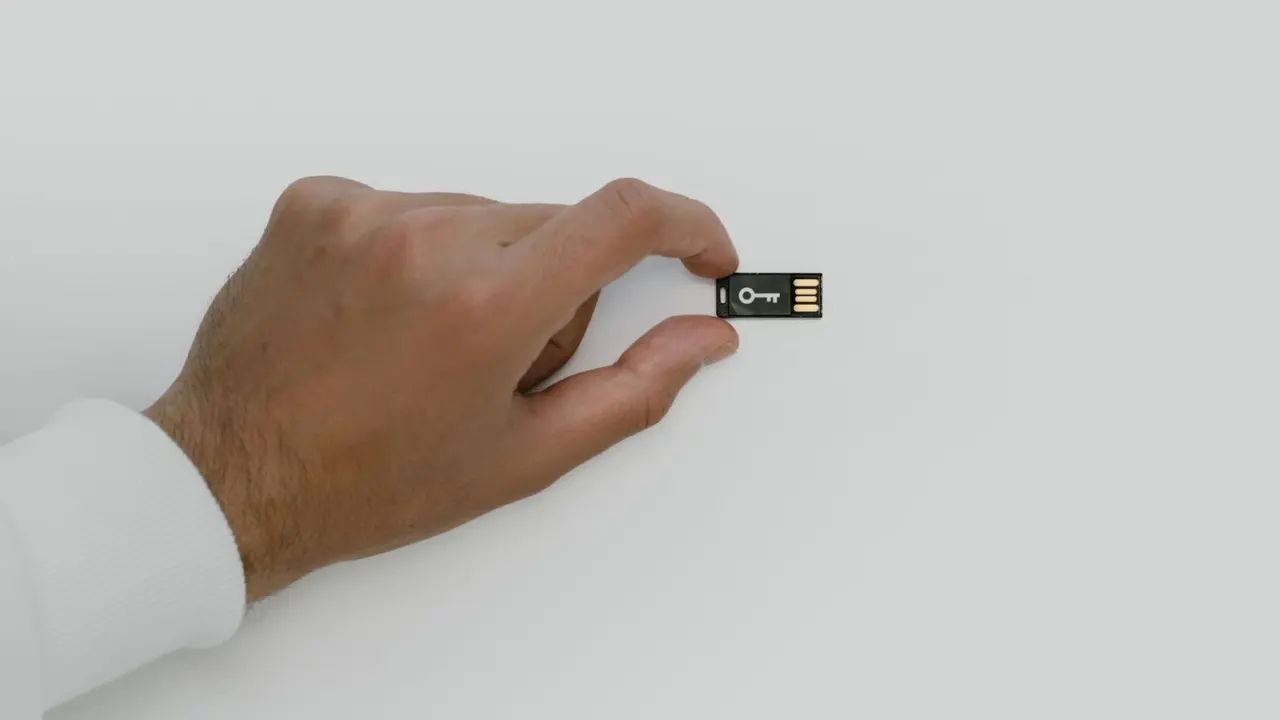
Wondering what is a private key and why everyone says never share it? It is a secret, very large number that lets you authorize spending from your crypto address; whoever holds it controls the funds. Here is how it works.
For the bigger picture of the ledger these keys protect, see this guide on how does blockchain work.
| Item | Value |
|---|---|
| Size of a Bitcoin private key | 256 bits |
| Number of possible private keys | approximately 2²⁵⁶ possible values |
| Compressed public key size | 33 bytes, shown as 66 hexadecimal characters |
| Effort to recover a private key from its public key | on the order of 2¹²⁸ operations |
| Seed phrase length | 12 or 24 words |
These figures come from Coldcard’s private and public keys guide and Coldcard’s public key cryptography guide. They can change, so check the source before you rely on them.
What a private key actually is
A private key is a large random number, typically generated by your Bitcoin wallet when you first set it up, according to Coldcard’s guide. It is the root of ownership: it generates the public key from which your receiving addresses are derived, and it authorizes the spending of any bitcoin sent to those addresses.
The sources used here describe Bitcoin, so the examples follow it. In that system, Coldcard’s public key guide says a 256-bit private key produces a 33-byte compressed public key.
In practical terms, a private key does three jobs:
- It proves ownership of the funds that belong to a given address, as River’s explainer puts it.
- It creates the signatures that are required to spend bitcoin.
- It never needs to leave the signing device, which is why you can prove ownership without revealing it.
The number of possible keys is about 2²⁵⁶, so the chance of anyone guessing a specific one by brute force is effectively zero, according to Coldcard.
How public and private keys work together
A public key is derived from the private key using a one-way mathematical function. You can create a public key from a private key but not the reverse, so the public key can be shared without compromising the private one, as Coldcard explains.
Think of a notary seal. Only the notary holds the stamp, but anyone who receives the document can confirm the seal is genuine, an analogy used in Coldcard’s public key guide.
When you send bitcoin, the process runs in these steps:
- Your wallet builds the transaction and signs it with your private key.
- The wallet presents your public key together with the signature.
- Every node checks that the public key matches the address holding the coins and that the signature came from the matching private key.
- If the checks pass, the transaction is relayed onward. If anything was modified after signing, it is rejected.
Each node that receives the transaction runs these checks independently, and no central authority decides, per Coldcard.
A Bitcoin public key is usually stored as 33 bytes and shown as a 66-character hexadecimal string, according to Coldcard’s public key guide. Recovering the private key from it would take on the order of 2¹²⁸ operations, a figure that guide calls beyond any realistic computational attack.
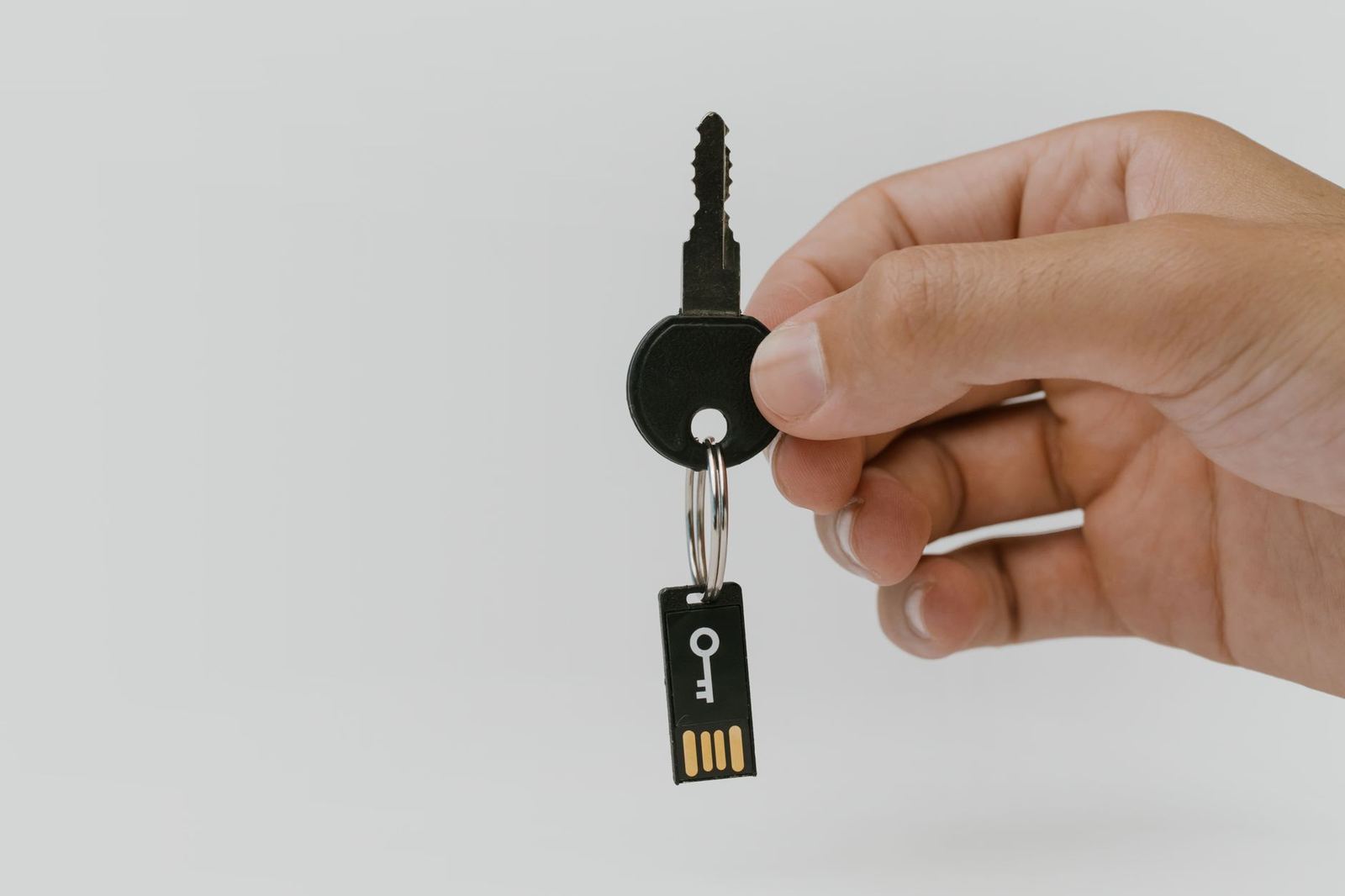
Why is a private key not a password?
A password is a shared secret used to authenticate with a central service, and it can usually be reset or recovered if lost. A private key has no such account, server or institution behind it, as Coldcard’s guide describes.
That is also why wallets are often misunderstood. River’s explainer notes that Bitcoin wallets do not hold actual bitcoin, only the keys that give you access to it, while the coins themselves are recorded on the blockchain.
Where private keys come from: seeds and wallets
Most people never see their private key. River describes a wallet that uses a secure random number generator to create a seed, from which it can derive as many keys as you need. That lets the wallet back up one seed instead of every individual key.
A seed phrase is a list of 12 or 24 common words that represents the randomness your wallet used, in a form you can read and record, according to Coldcard. The same guide explains that keys are deterministic: the same private key always produces the same public key, which is what lets a seed phrase recover an entire wallet.
There are two broad ways to hold keys:
- Hot wallets are internet-connected apps, usually on the web or a phone, that store your keys for fast access.
- Cold storage usually means a hardware wallet, a small device that stores your keys offline.
Both have trade-offs. River’s guide says that with cold storage you are responsible for your own security, with no third party to turn to if you lose your device or seed phrase. That arrangement is called self-custody.
What happens if a key is lost or exposed
Losing a key and leaking a key are both serious, and neither can be undone. River states that if you lose your private keys and do not have the wallet’s seed phrase, you lose access to the funds tied to those keys.
The opposite problem is exposure. Coldcard’s guide says that someone who obtains or copies your key can transfer your bitcoin to any address they choose, and the transaction cannot be stopped or reversed once confirmed. It adds that there is no customer support line, no institution to appeal to and no way to recover what is gone.
The same guide gives these cautions:
- If you ever see a private key displayed, do not photograph it, copy it, share it, type it or read it aloud to anyone.
- Treat seed phrases with the same care as the private key itself.
- Remember that whoever holds the private key controls the bitcoin.
This is general education about how the technology works, and holding crypto carries other risks too, such as scams, volatility and changing regulation.
A short history of key pairs
Key pairs are older than Bitcoin. According to Bitcoin Magazine’s glossary, public key cryptography was first published in 1976 by Whitfield Diffie and Martin Hellman in a paper titled “New Directions in Cryptography”. In 1978, Ron Rivest, Adi Shamir and Leonard Adleman introduced the RSA algorithm.
Bitcoin’s own format has also changed over time. Coldcard notes that modern wallets have used compressed public keys since around 2012.
If you want to see how new coins enter the system, which is a separate process from creating keys, read about what is crypto mining. For networks built on top of a base chain, there is a companion explainer on what is a layer 2 blockchain.
Frequently asked questions
Is a private key the same as a seed phrase?
Show answer
No, but they are closely linked. A seed phrase is a list of 12 or 24 words that represents the randomness your wallet used to generate your private key, and Coldcard says it deserves the same care as the key itself.
Can someone work out my private key from my public key?
Show answer
There is no known method of computing a private key from its public key, according to Coldcard. Its public key guide adds that an attacker would need on the order of 2¹²⁸ operations.
Is it safe to share my public key?
Show answer
Yes. Public keys can be shared publicly without compromising the private key, and anyone can use one to verify a signature, as Coldcard explains.
Can a lost private key be recovered?
Show answer
Not by a company or support desk. River says that without the seed phrase you lose access to the funds, which is why backups matter.
This page is for general information and education only and is not financial, investment, tax or legal advice.